 |
| c. 36-33 BCE |
This coin shows Marc Antony on one side (left) and Cleopatra on the other (right), and is one of several coin types which depicted them together. Coins were used for propaganda purposes, as a media which many people would have access to on some level, and allowed for large numbers of people to become visually familiar with their union. In this image Cleopatra is shown in a Roman portrait style which complements that of Marc Antony.
 |
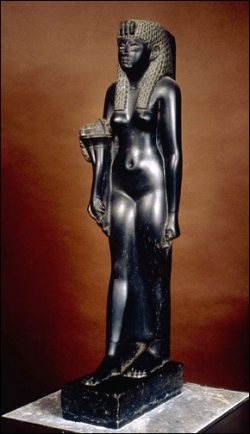
| c. 51-30 BCE |
This statue of Cleopatra VII is quite a different type of depiction, clearly showing her status as an Egyptian and using traditional and formulaic style.
She has the idealized features, rigid stance, and headdress typical to statues of Pharaohs.
 |
| 1934 |
This images is taken from the 1934 Cecil B. Demille
film Cleopatra starring Claudette Colbert in the title role, and Warrren William (shown here) as Julius Caesar.
 |
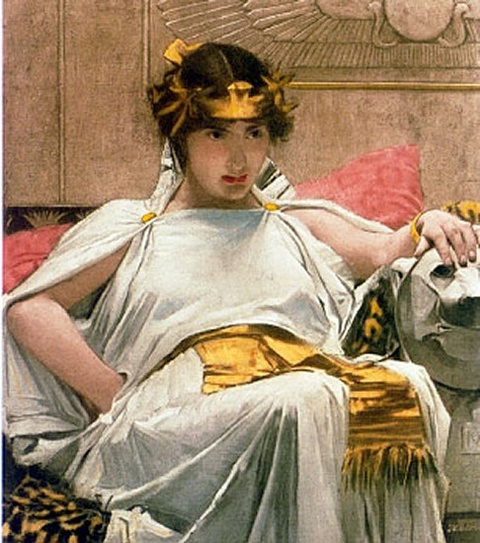
| 1888 |
This is an 1888 oil painting by J. W. Waterhouse who was associated with the Pre-Raphaelite movement. I particularly like this image because it seems to encapsulate the contradictory types of imagery used by Horace when discussing Cleopatra. She is both powerful (regina) and soft (mollis, in simile), she has a regal command yet remains alluring.She is flushed and slouched (tipsy?) but maintains a determined and somewhat fierce look in her eyes,suggestive of a person who will do whatever she needs to in order to achieve her ends.



No comments:
Post a Comment